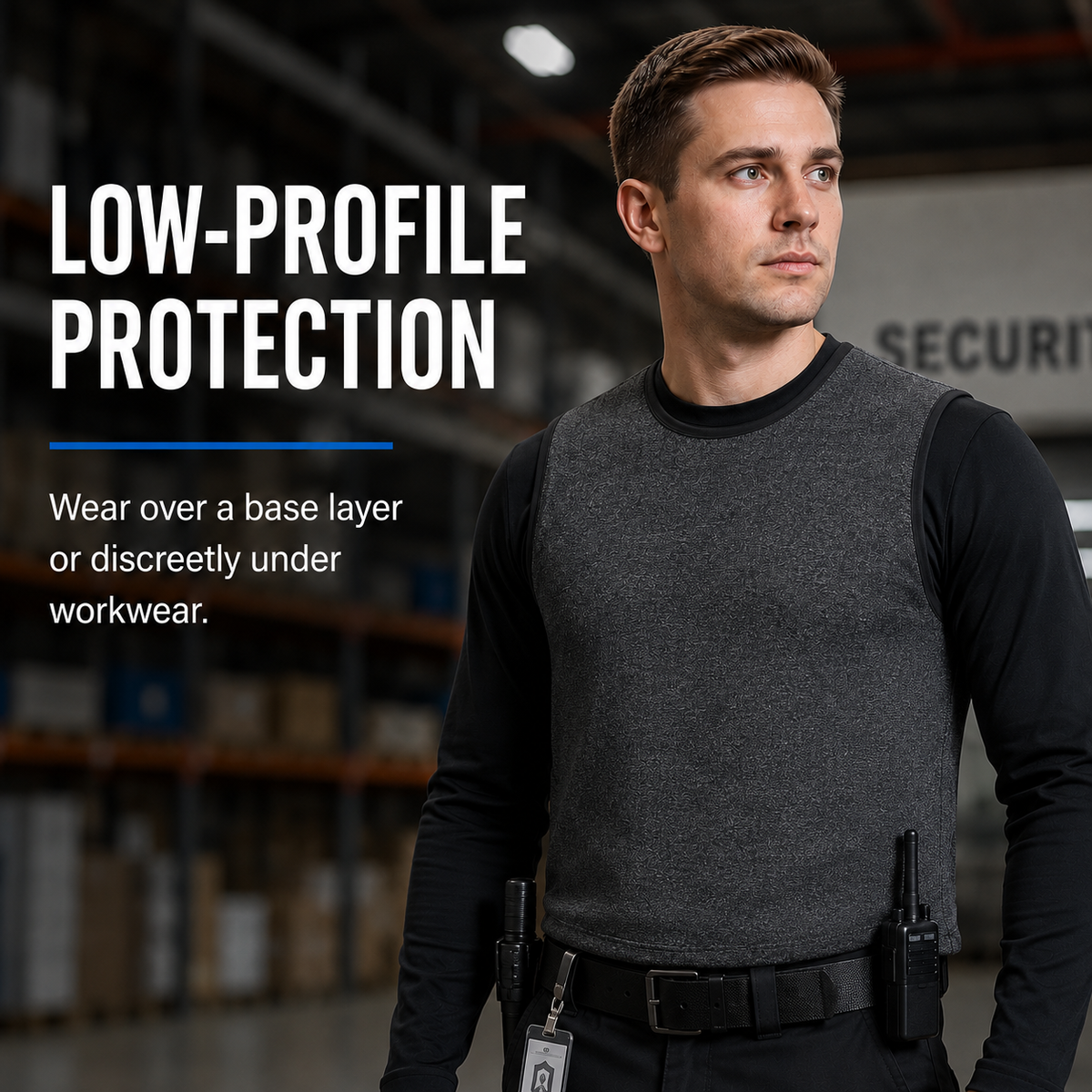
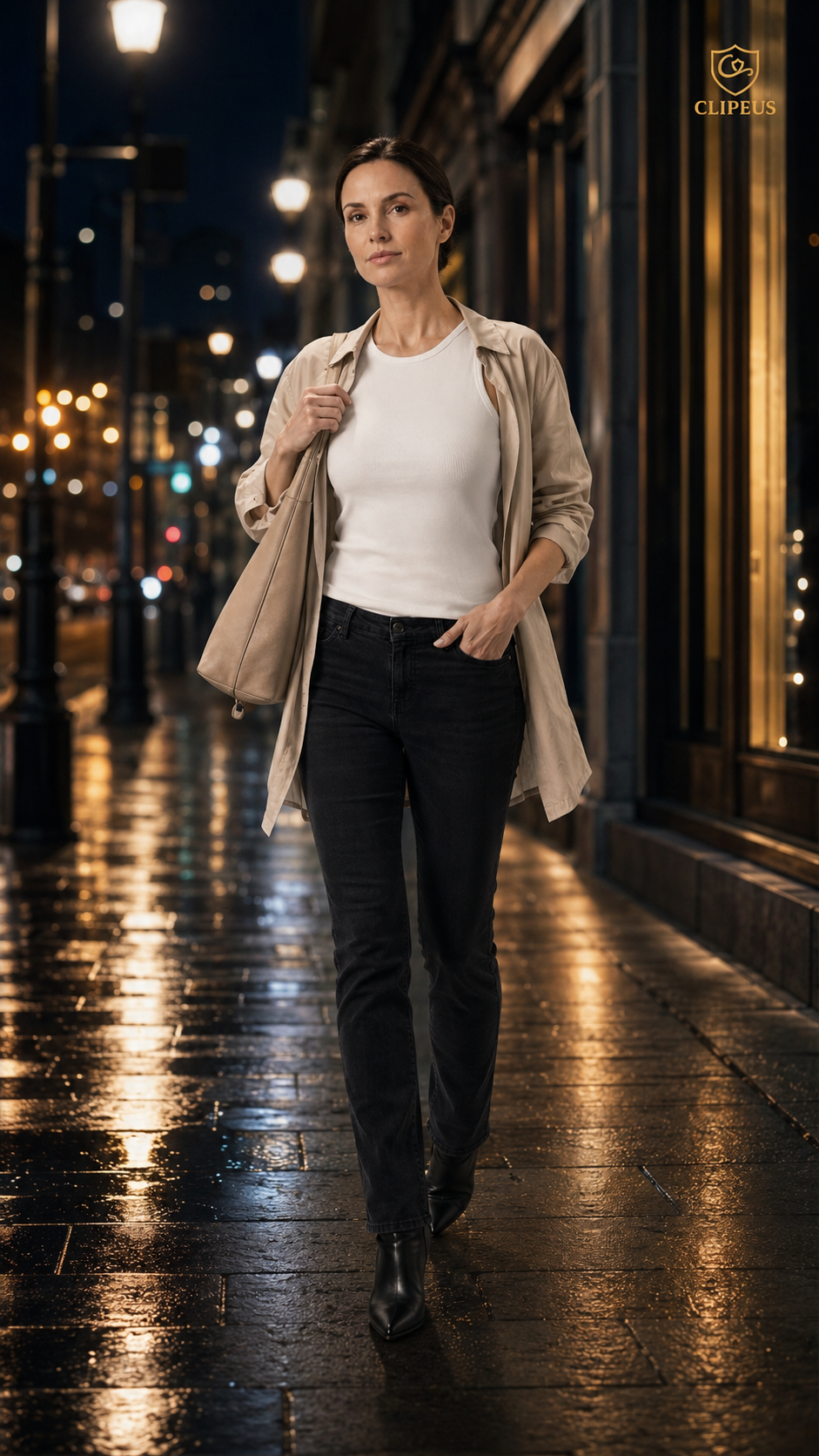
Before buying a cut-resistant long-sleeve shirt, check the named test standard, separately stated cut and puncture levels, coverage, material, fit, and the product’s limits. Protective clothing should match the task and should never be treated as complete protection.
This guide uses the CLIPEUS Type 1 Cut & Puncture-Resistant Long-Sleeve Top as a real example. Its product page lists EN 388 Cut Level 5, EN 388 Puncture Level 4, lightweight UHMWPE knit, a dark-grey design, and manufacturing in Korea.
1. Is the cut-resistance claim tied to a named test?
Words such as “protective,” “cut-resistant,” and “knife-proof” are not interchangeable. Start with the test information shown on the product page. A named standard and level give buyers something specific to evaluate; a vague claim does not.
The search phrase “knife-proof clothing” is common, but it should not be read as a promise that clothing cannot be cut. Performance can vary with the object, angle, force, wear condition, and point of contact.
2. Is puncture resistance stated separately?
Cut resistance and puncture resistance describe different hazards. The selected CLIPEUS product separately lists EN 388 Puncture Level 4 in addition to EN 388 Cut Level 5.
If your work involves both edges and pointed objects, confirm that the product page addresses both properties instead of assuming one rating covers every hazard.
3. Does the garment cover the areas relevant to the task?
A long-sleeve protective shirt covers the torso and arms, while a vest leaves the arms uncovered. More coverage is not automatically the right answer for every job: mobility, heat, layering, and the location of the expected hazard all matter.
For upper-body and arm coverage, review the Type 1 long-sleeve product details, sizes, images, and current availability before choosing.
4. Can it work as an inner layer?
The product page describes the Type 1 top as flexible protective innerwear for discreet everyday wear. It uses lightweight UHMWPE knit and is offered in dark grey, with current size choices shown on the product page.
Consider whether it will be worn over a base layer or beneath a uniform or jacket. A useful fit should stay in the intended position without unnecessarily restricting normal movement.
5. Are the limits explained clearly?
The demonstrations shown on the product page illustrate specific conditions and are not a substitute for certified test results. Actual protection varies with the object, angle, force, wear condition, and point of impact.
This shirt is not bulletproof and does not guarantee complete protection. Do not intentionally test a garment on the body. Follow workplace procedures, avoid hazards where possible, and use any additional protective equipment required for the task.
Quick buying checklist
- Look for a named test standard and exact level.
- Check cut and puncture information separately.
- Choose coverage based on the body areas exposed to the hazard.
- Review fabric, layering, movement, and current size options.
- Read the limitations before purchase and use.
FAQ
Is a cut-resistant shirt the same as a stab-proof shirt?
No. These phrases can reflect different test methods and hazards. “Stab proof” may also imply absolute protection that clothing cannot guarantee. Check the named standard and separately stated cut and puncture performance.
What does EN 388 Cut Level 5 mean on this CLIPEUS shirt?
It is the cut-resistance level listed on the product page for the tested material. Consider it together with the separately listed EN 388 Puncture Level 4 and the stated limitations.
Where is the CLIPEUS Type 1 long-sleeve top made?
The product page states that it is made in Korea.
Does the shirt guarantee protection from every sharp object?
No. No protective garment can guarantee complete protection in every situation.
Review the verified product details
See current specifications, size choices, price, images, and availability on the CLIPEUS Type 1 product page. Browse more educational content in the CLIPEUS News blog.